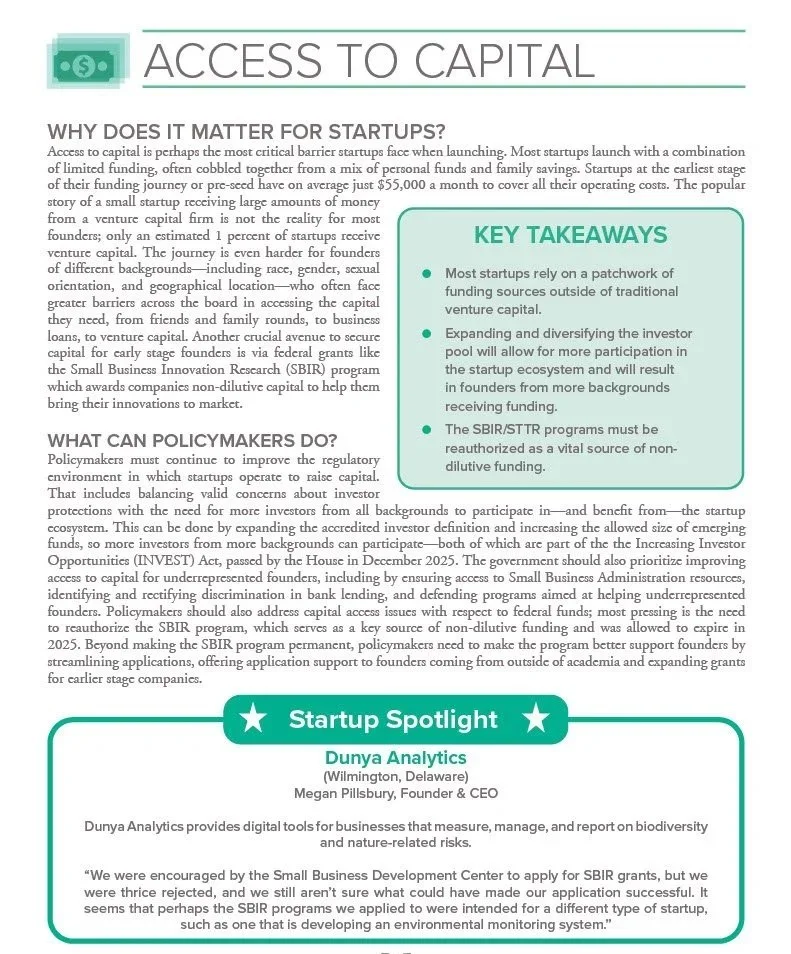
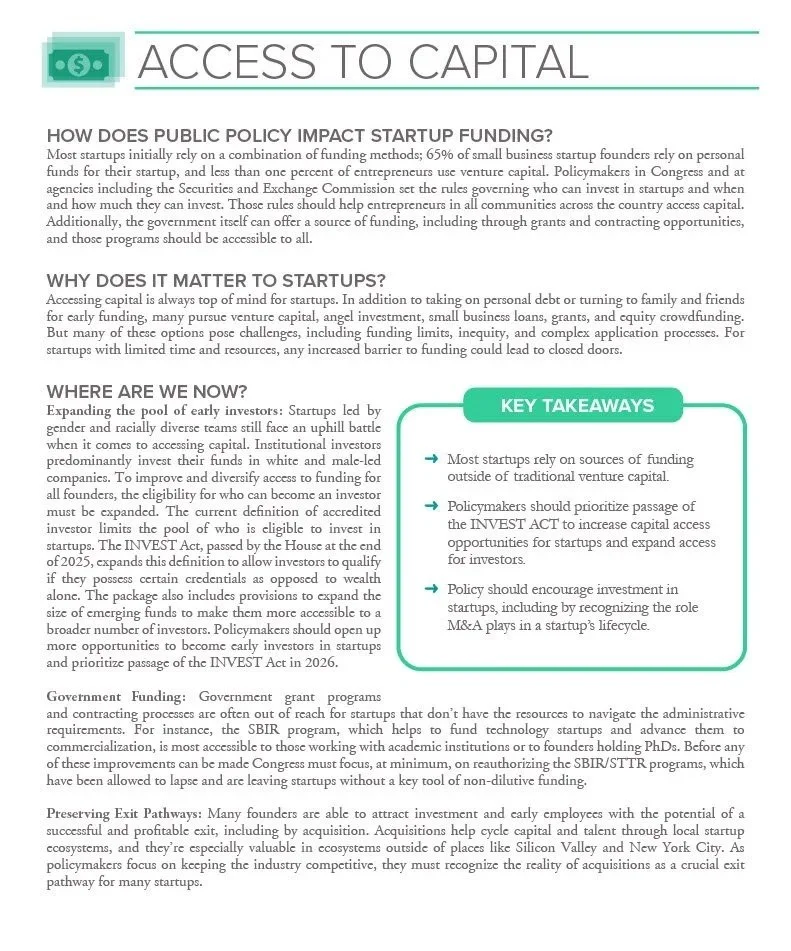
Limited access to capital can be one of the biggest challenges facing a startup. Thankfully, Congress has taken steps toward loosening regulations on how startups can raise money from new groups of investors, including “crowdfunding” which may open up an entirely new market for equity investment. Policymakers and the Securities and Exchange Commission must protect investors while implementing new laws that create sustainable capital streams for entrepreneurs.
The U.S. startup ecosystem is anchored by the premise that anyone—no matter their race, gender, sexual identity, background, or location—with an idea and the will, can launch a startup and grow a successful company.
Building on Engine’s previous research on the role of acquisitions in the startup ecosystem, Engine today released a report examining the ways that acquisitions are a critical component of the startup ecosystem, featuring over a dozen startup founders, investors, and accelerators.
The U.S. startup ecosystem is defined by dynamism. Startups are constantly being founded, earning investment, growing, exiting, and—yes—failing in cities and towns all across the country. Startup exits and investment are two intimately related and important drivers of this dynamism critical to economic growth and innovation in the startup ecosystem. Startup exits—both those that are profitable and those that are not—promote the building of knowledge, recycling of talent, and flow of capital through the ecosystem. Each of those components are key to building new startups and stimulating the investment needed to grow them to scale.
Today, Engine issued a paper focused on the policy insights needed—and the legislative actions required—to adequately support the expanse of the startup ecosystem, and to grow the innovation economy. We hope this paper can serve as a resource for policymakers considering a wide range of policy issues that impact early-stage companies across the country.
Today, Engine, along with the Charles Koch Institute and Startup Genome, issued a report looking at the overall health of the startup ecosystem. We hope this report can serve as a resource for policymakers considering a wide range of policy issues that impact early-stage companies across the country.
Broadly, there are three types of startup exits: going public, being acquired, or failing.
Congress passed a plan to build Silicon Valleys across the country, now they just need to fund it
Trump administration targets programs that provide funding, resources to startups